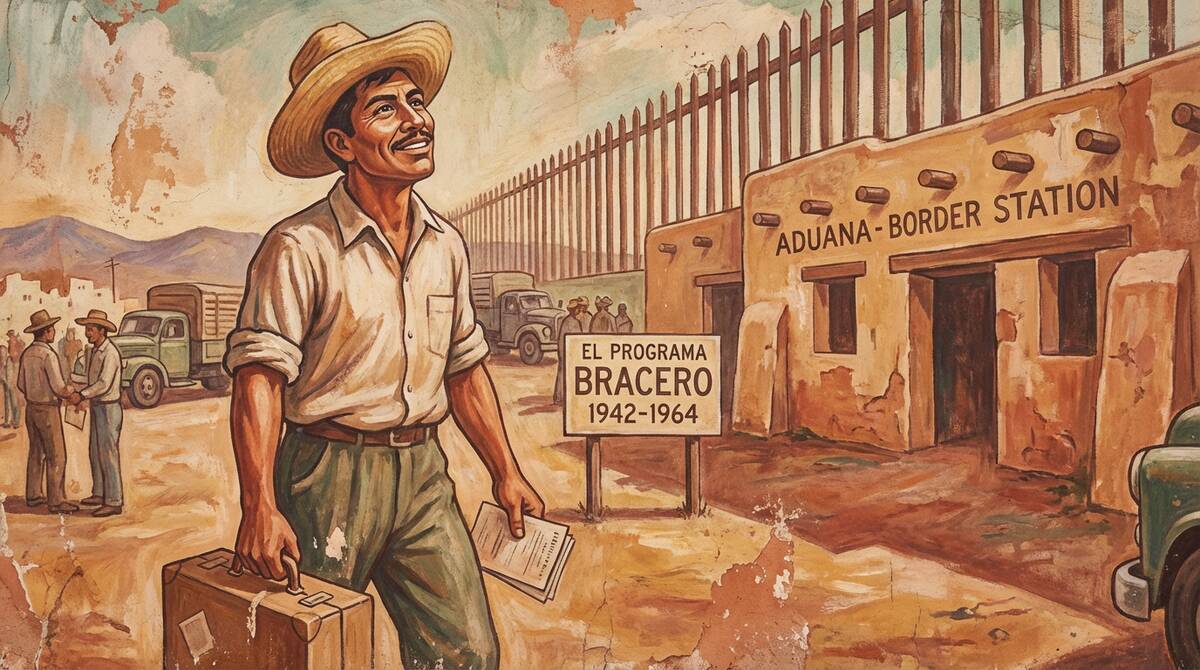
Setting: A border crossing. A worker carries a simple suitcase.
Narrator 1: By the 1940s, the world was at war again. The United States needed workers to feed the world, so they looked south.
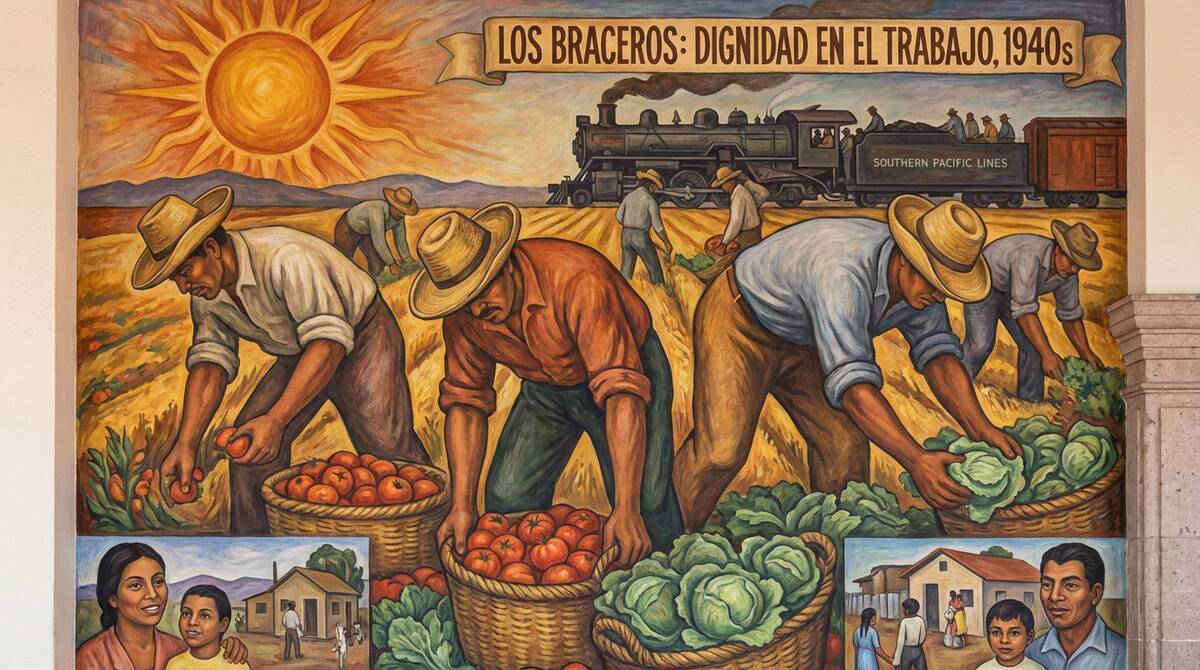
Narrator 2: The "Bracero" program began in 1942. Millions of Mexican men left their families to work the fields of California, Texas, and Arizona.
Bracero Worker: (Walking slowly, tired) I leave my home to feed my family. It is hard work. We move from farm to farm, wherever the crops are growing. I am a stranger here.
U.S. Foreman: Welcome. We have a lot of work to do. But tell me, why do you carry that small picture in your bag? It's just a print.
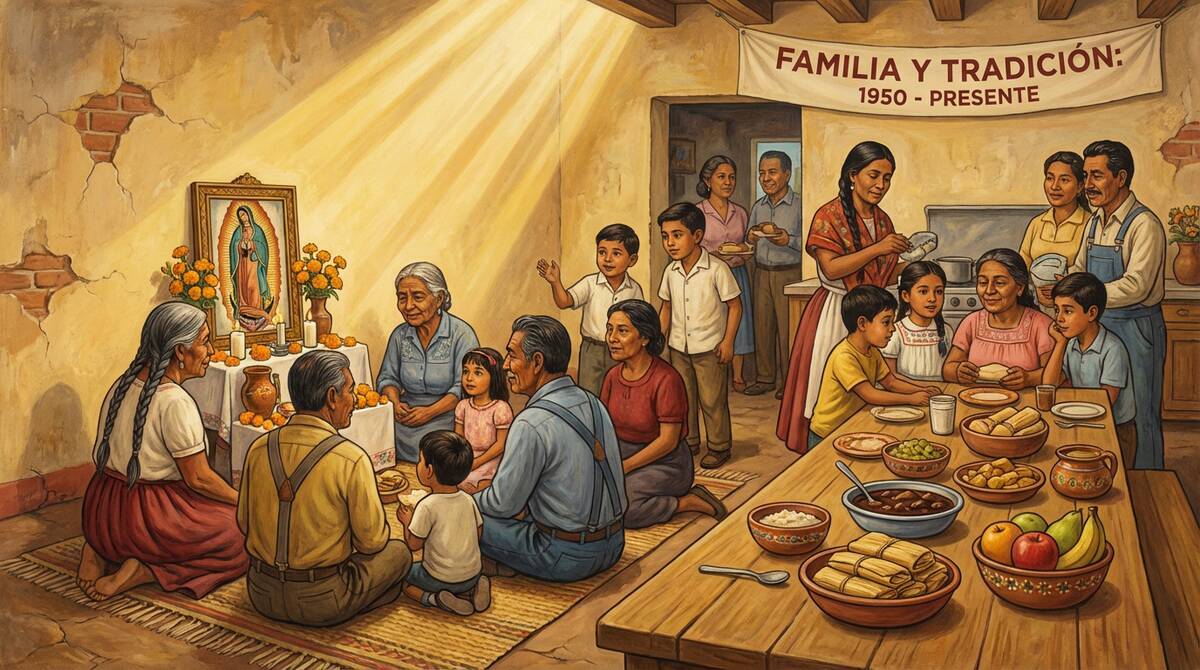
Bracero Worker: (Holding up a small image of Guadalupe) This? This is not just a print. This is my portable homeland.
U.S. Foreman: Your homeland?
Bracero Worker: She appeared to my ancestors to tell us we are important. When I am lonely in the fields, she reminds me who I am. She reminds me that I am never truly an orphan.
Narrator 1: When these workers moved North, they were actually returning to lands that had been part of New Spain centuries ago.
Narrator 2: They brought their hands to work, but they brought their hearts to pray.
Narrator 1: The Bracero program officially ended in 1964, but the migration continued. Today, over 37 million people of Mexican origin live in the United States.
Narrator 2: The heritage of Mexico is not just found across the border. It is woven into the life, architecture, and spirit of the United States.