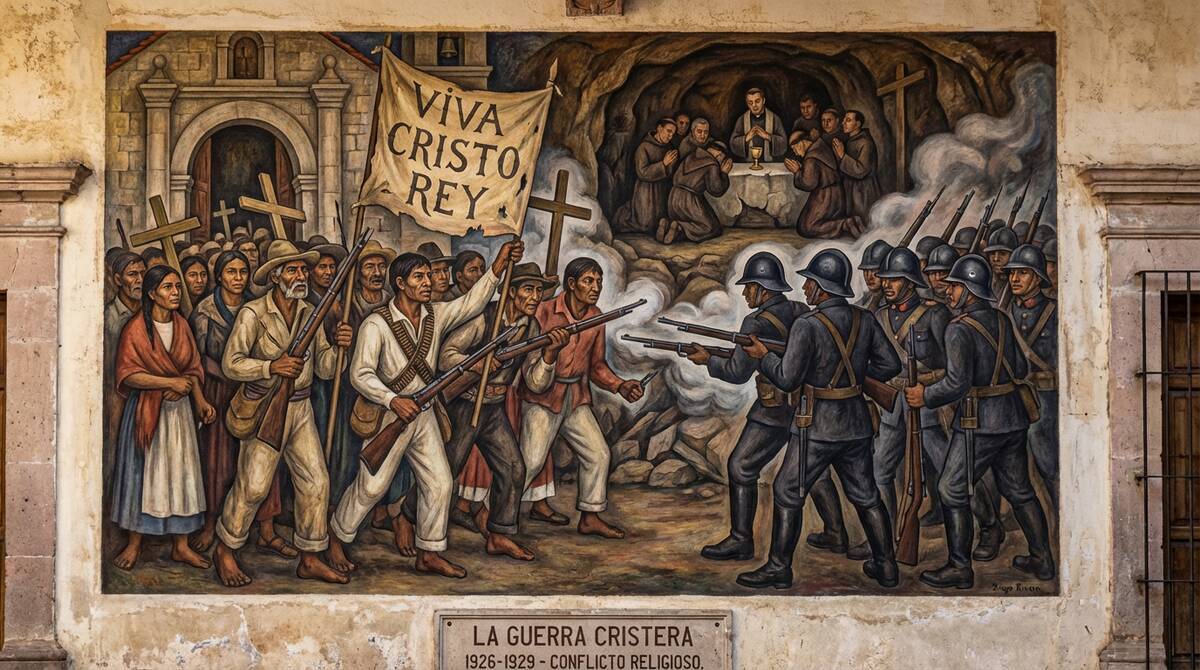
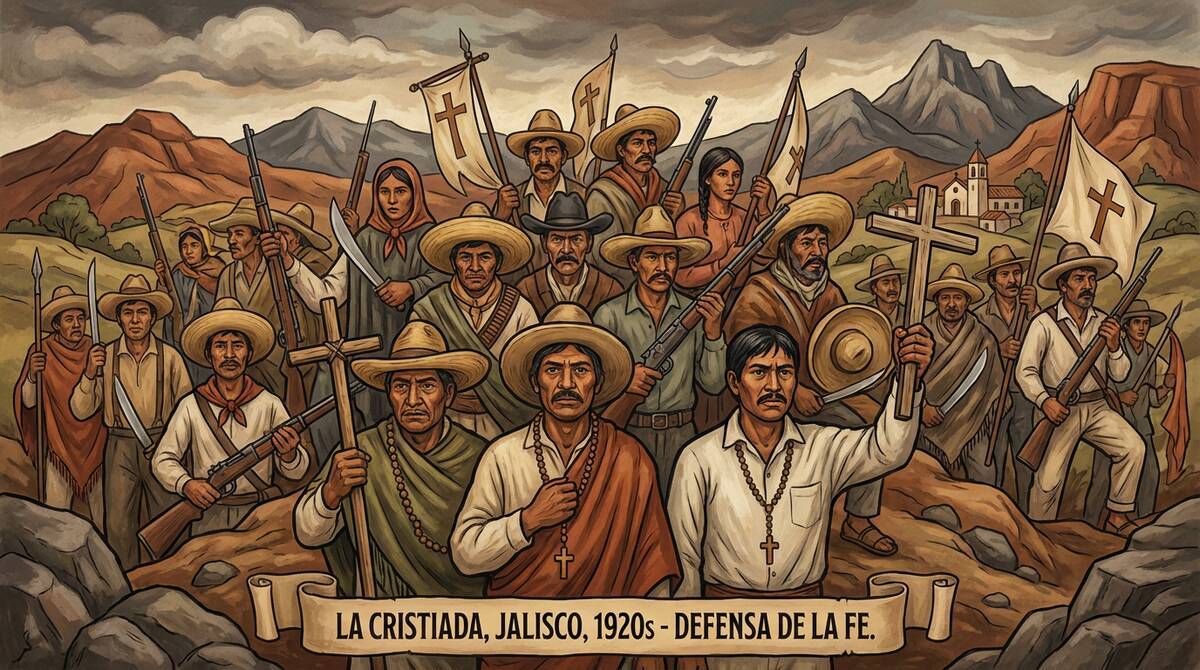

Setting: A sterile government office vs. a rugged field.
Narrator 1: After the chaos of the Revolution, a new government seized power. They believed that to be a modern nation, they had to destroy the old ways.
Narrator 2: And the oldest way of all was the Church. In the 1920s, the government declared war on the faith itself.
Government Official: (Slamming a fist on the table) We are entering the 20th Century! We cannot have a country run by superstition. We must strip the Church of its property and its influence.
Cristero Captain: You speak of "progress," but you act like a tyrant!
Government Official: I speak of Sovereignty! A Mexican citizen answers to the State, not to a Pope in Rome. We will ban the public Mass. We will exile the bishops. It is the law!
Cristero Captain: (Defiant) There is a higher law. You can take our land, you can burn our churches, but you cannot take our soul. We fight for the freedom to believe in the God who saved our ancestors.
All Cristeros: ¡Viva Cristo Rey! (Long Live Christ the King!)
Narrator 1: This was the Cristero War, from 1926 to 1929. Thousands of ordinary Catholics—farmers, teachers, even children—took up arms against the government.
Narrator 2: The war was brutal. Priests were executed. Villages were burned. But the Cristeros fought on, carrying the banner of Guadalupe as their ancestors had done a century before.
Narrator 1: Eventually, the violence subsided. The government realized that you cannot kill a faith that is woven into the DNA of the people.
Narrator 2: The Church and State reached an uneasy truce. But the land remained poor, and a new journey was about to begin.