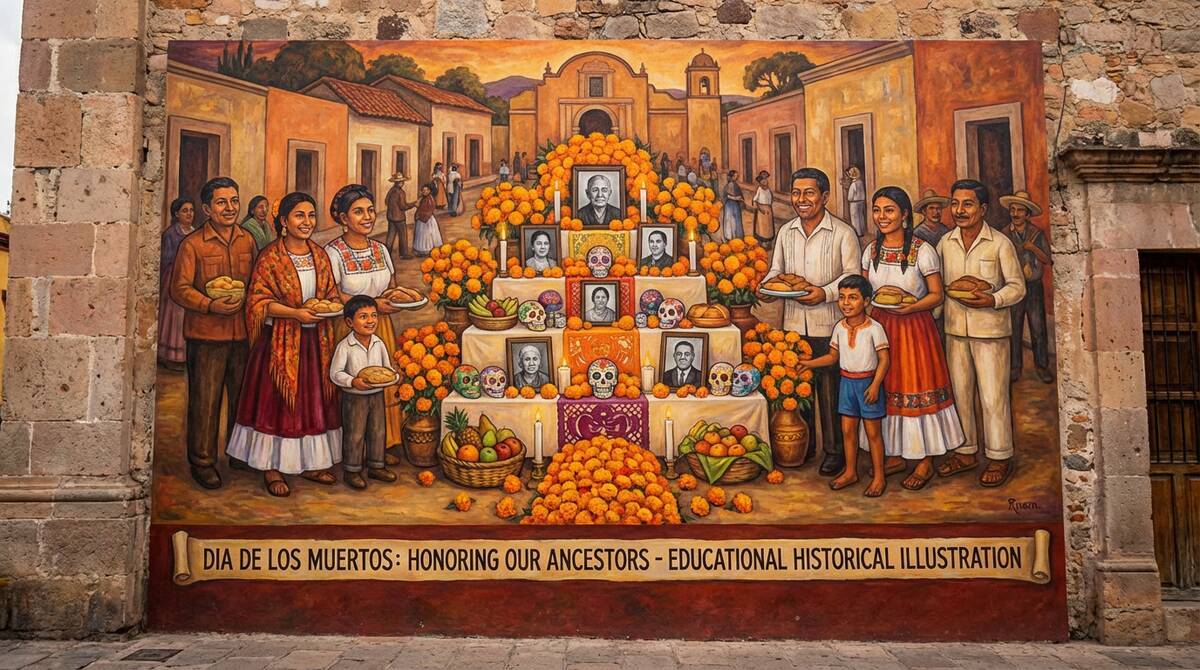
Setting: A modern Mexican-American home with an altar during Día de los Muertos. Photos of ancestors line the ofrenda.
Narrator 1: And so we come to today. Five hundred years after the Conquest, three hundred years after the Virgin appeared, two hundred years after independence...
Narrator 2: ...the story of Mexico continues. Not just in Mexico City or Guadalajara, but in Los Angeles, Chicago, Houston, and right here in our own community.
(A Modern Student enters, absorbed in a phone. A Grandmother sits near an altar.)
Modern Student: (Looking up from phone) Abuela, why do you set up this altar every year? Isn't it kind of... morbid? Decorating with skulls?
Grandmother: (Smiling gently) Mijo, you think this is about death? No. This is about life! Día de los Muertos is when the door between worlds opens. Our ancestors come back to visit.
Student: But... they're gone.
Grandmother: (Touching a photo on the altar) Are they? This is your great-great-grandfather. He was a Bracero—worked the fields in California so his children could go to school. And this woman? She was a Cristera—she hid priests during the persecution. Their blood runs in you.
(A Community Leader enters, carrying marigolds.)
Community Leader: The marigold is the flower of the dead. Its bright color and strong scent guide the spirits home. This tradition goes back to the Aztecs—long before the Spanish came.
Student: So it's not Catholic?
Leader: It's both! That's what makes it Mexican. The Indigenous peoples celebrated the dead in summer. The Spanish brought All Saints' Day in November. The two traditions danced together and became something new.
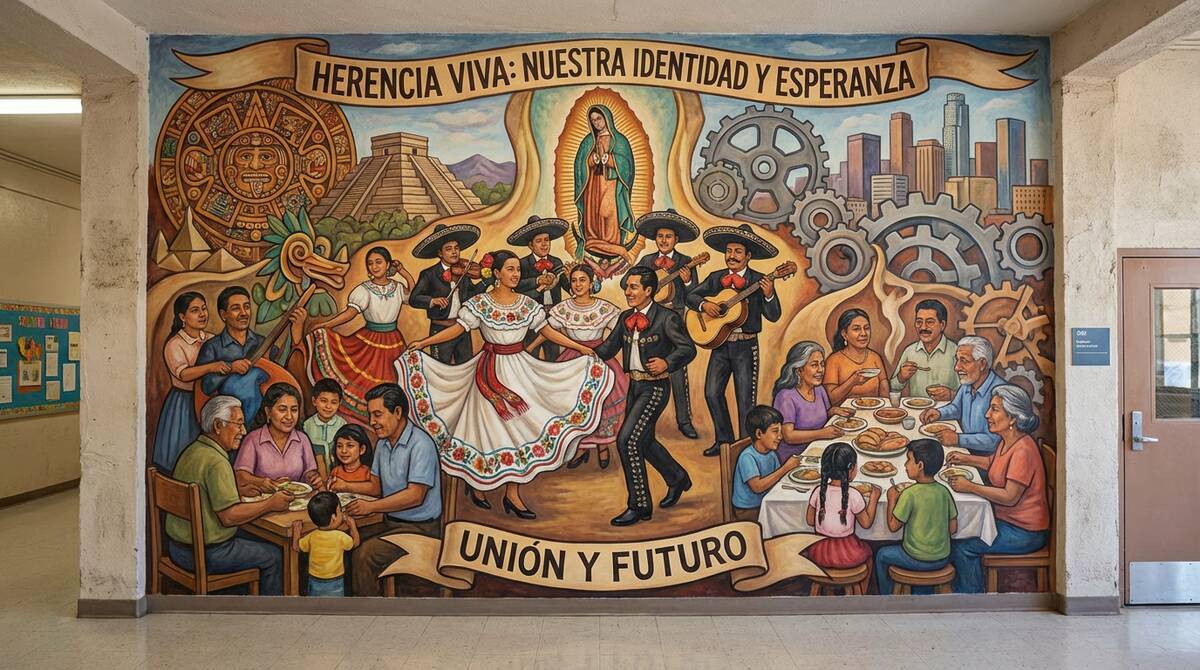
Grandmother: (Standing, placing a hand on Student's shoulder) You are the living heritage, mijo. Every time you speak Spanish, every time you eat your mother's tamales, every time you see the Virgin of Guadalupe—you are carrying forward five hundred years of history.
Student: (Looking at the altar with new eyes) I never thought about it that way. It's like... I'm not just me. I'm all of them too.
Narrator 1: This is the final lesson of Mexican history: identity is not something you are given. It is something you carry, something you build, something you pass on.
Narrator 2: From the fall of Tenochtitlán to the vision on Tepeyac, from the Cry of Dolores to the blood of the Revolution, from the Cristero war to the Bracero fields—every generation has faced a choice.
Grandmother: The choice is: Do we remember? Do we honor those who came before? Do we pass the torch to those who come after?
Student: (Placing a flower on the altar) I will remember.
Leader: (To audience) And now, we invite you to remember too. Whose shoulders do you stand on? What heritage do you carry?
(All cast members from previous scenes appear as "spirits" behind the altar.)
Narrator 1: Moctezuma, who faced an impossible choice. Juan Diego, who believed when no one else did. Father Hidalgo, who rang the bell of freedom.
Narrator 2: The Cristeros who died for their faith. The Braceros who carried their homeland in a picture. The Revolutionaries who cried "Tierra y Libertad."
All Cast: (In unison) We are the Fifth Sun. We are the living heritage. We remember.
(Music swells—traditional Día de los Muertos melody. Lights slowly fade. End of Play.)