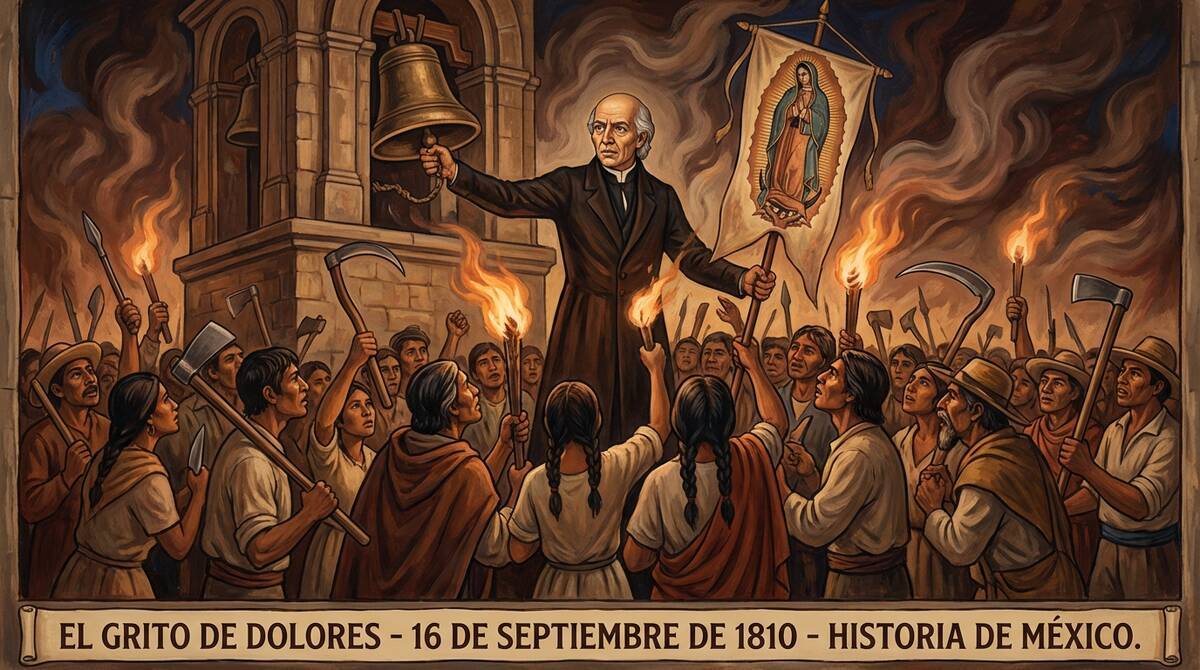
Setting: A balcony in Dolores. Father Hidalgo holds a bell rope.
Narrator 1: After nearly three centuries of colonial rule, the "children" of this new land realized they had grown up. They didn't need a King across the ocean telling them who they were.
Narrator 2: The spark came from an unlikely source: a 57-year-old Criollo priest who loved music, philosophy, and justice.
Father Hidalgo: (Ringing the church bell vigorously) Children of Mexico! The Spanish government takes our wealth and disrespects our land! Will you be slaves forever?
Crowd: No!
Father Hidalgo: (Holding up the Banner of Guadalupe) Look who leads us! We do not fight for a foreign King! We fight for the Queen of this land! She is the mother of Mexico, not Spain!
Crowd: Long live Our Lady of Guadalupe!
Father Hidalgo: Long live Independence!
Crowd: Viva!
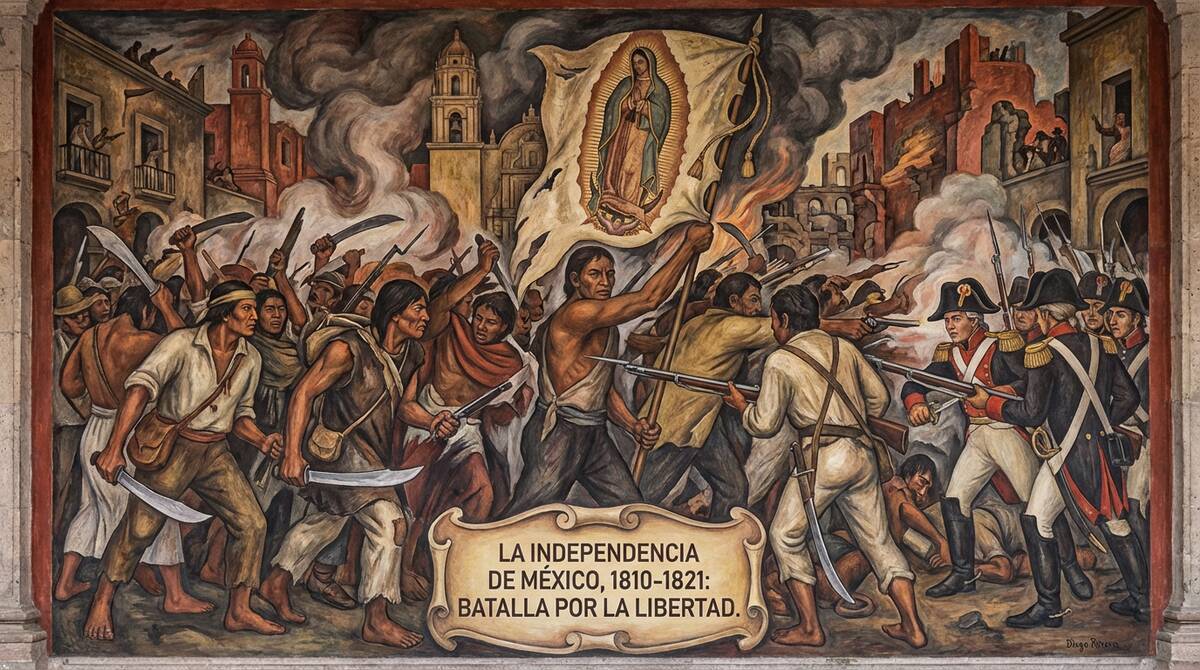
Narrator 1: This was "El Grito"—the Cry of Dolores on September 16, 1810. Hidalgo lit the fire, but he was captured and executed before he could see the victory. The war dragged on for eleven bloody years.
Narrator 2: Other heroes rose: José María Morelos, who fought for racial equality; Vicente Guerrero, a mixed-race leader who never surrendered.
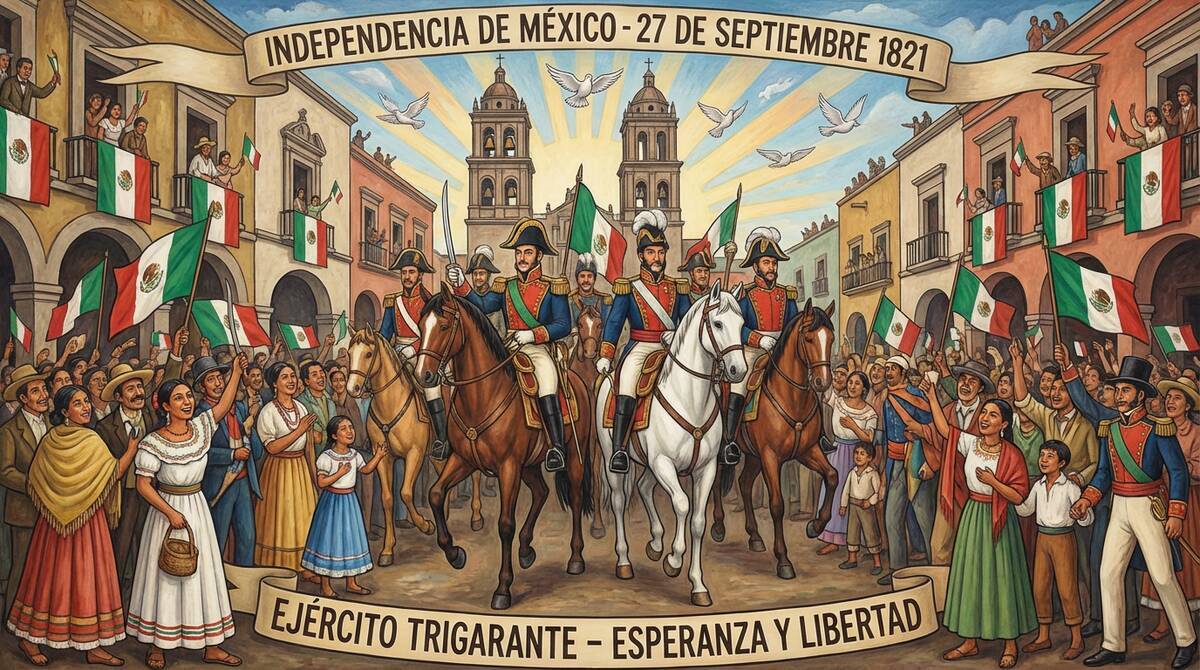
Narrator 1: Finally, it was a conservative general named Agustín de Iturbide who finished what Hidalgo started. On September 27, 1821, he rode into Mexico City and declared the formal independence of the nation.
Narrator 2: This was the "Consummation" of the war. Mexico was free.
Narrator 1: But peace would not last. The 19th century brought civil wars, foreign invasions, and the loss of half the territory to the United States. Mexico would struggle to find its identity for generations to come.