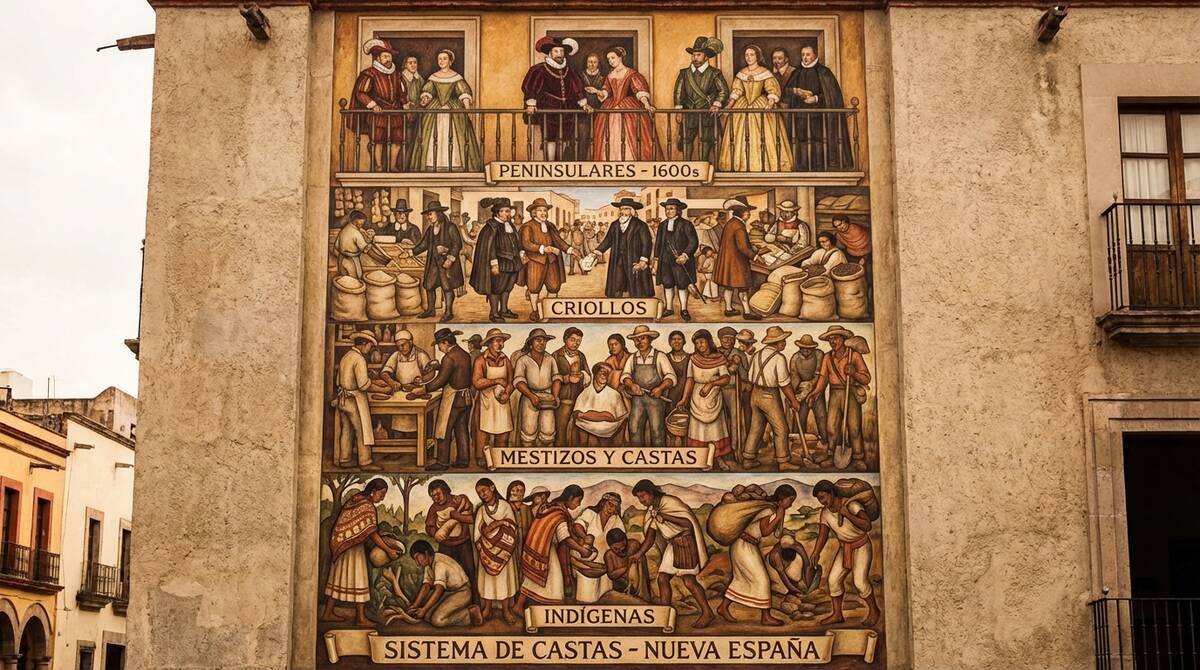
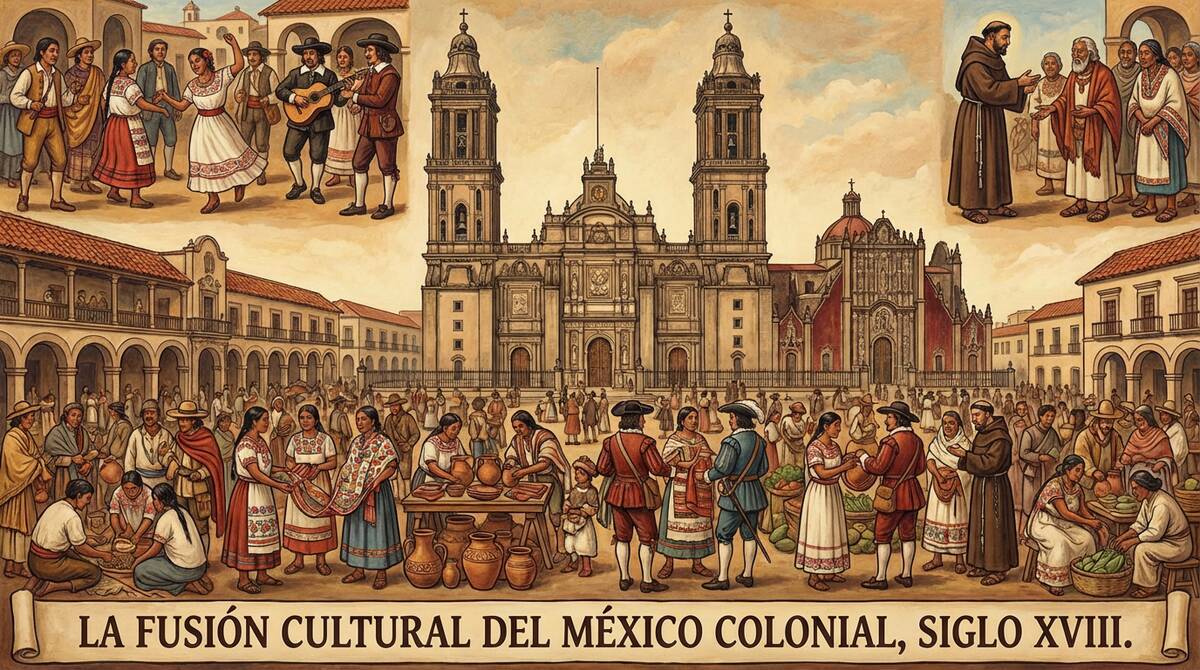
Setting: A colonial plaza with a grand cathedral. Different social classes occupy distinct spaces. The year spans 1521 to 1810.
Narrator 1: After the Conquest, Spain ruled Mexico for nearly 300 years. This was the "Colonial Era"—a time of transformation, mixing, and deep inequality.
Narrator 2: At the top sat the Viceroy, the King's representative, ruling from a palace built on the ruins of Moctezuma's court. Below him, society was divided by blood.
(The Spanish Viceroy sits on an elevated throne. A Criollo Merchant approaches, bowing.)
Spanish Viceroy: (Not looking up) You wish to petition the Crown?
Criollo Merchant: Your Excellency, my family has lived in New Spain for three generations. We own silver mines, we build churches, we are loyal Catholics—yet we cannot hold high office because we were not born in Spain!
Viceroy: The law is clear. Only Peninsulares—those born on the Spanish peninsula—may govern. You Criollos are... Spanish, yes, but you are touched by this land. Your loyalty is... uncertain.
Criollo: (Bowing, but with barely hidden resentment) As you say, Your Excellency.
Narrator 1: Below the Criollos were the Mestizos—children of Spanish and Indigenous parents. They could own property but rarely wealth. They were the growing majority, belonging fully to neither world.
(A Mestiza Woman enters, carrying goods to sell. She moves between the groups but is never fully welcomed.)
Mestiza Woman: (To audience) My father was a Spaniard. My mother was Nahua. The priests baptized me, but the fine ladies will not invite me to their parties. The Indigenous elders say I have forgotten the old ways. I am both—and I am neither. But look around... there are more of us every day.
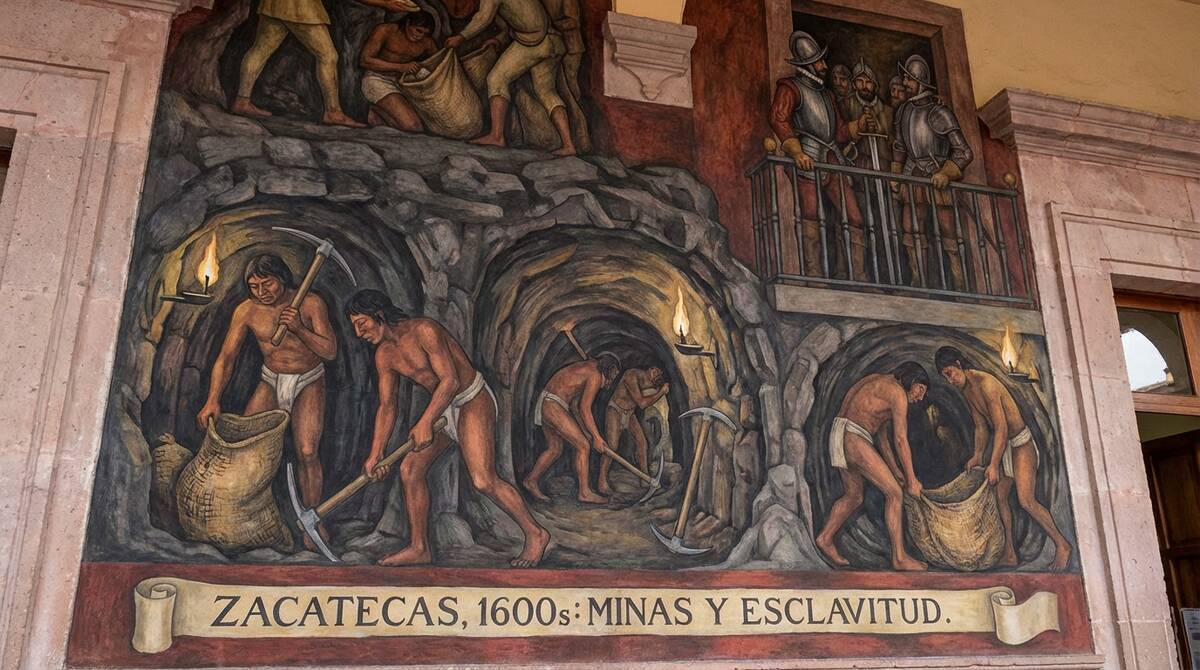
Narrator 2: At the bottom were the Indigenous peoples and enslaved Africans. They built the churches, worked the silver mines, and fed the colony—yet owned almost nothing.
(An Indigenous Miner enters, carrying a heavy load. He sets it down with exhaustion.)
Indigenous Miner: (Speaking quietly, with dignity) My ancestors built pyramids to touch the sky. Now we dig into the earth so Spain can cover itself in silver. They have taken our lands, our temples, even our names. But they cannot take what we remember. In our homes, we still speak Nahuatl. We still honor the old festivals—we just call them by saints' names now.
Narrator 1: This was the paradox of colonial Mexico: a rigid caste system that tried to separate people—while culture, food, music, and faith blended together anyway.
Narrator 2: The mestizaje—the mixing—could not be stopped. Spanish guitars played Indigenous rhythms. Catholic churches rose on ancient temple foundations. The Virgin of Guadalupe united all.
Mestiza Woman: (Stepping forward) They tried to put us in boxes: Peninsular, Criollo, Mestizo, Indio, Negro, Mulato... dozens of names to divide us. But love does not follow categories. Children are born. Families blend. And one day, we will simply call ourselves... Mexicanos.
Narrator 1: That day came in 1810, when a Criollo priest named Miguel Hidalgo rang a bell and called all the children of Mexico—of every caste—to fight for freedom together.